
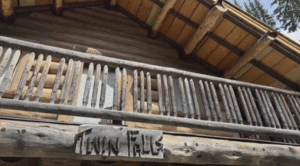
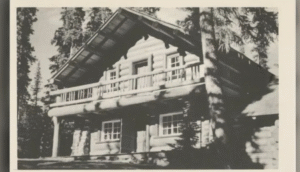
According to CTV News, the Twin Falls Chalet, a historic building located deep in the wilderness of Yoho National Park in British Columbia, is poised to reopen to visitors as early as 2027 after years of dormancy.
This lodge once attracted hikers and climbers from around the world.
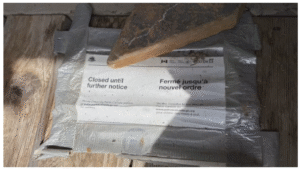
For many years, Fran Drummond was responsible for its operation. However, in 2019, Parks Canada decided not to renew her contract, leading to the closure of the lodge.
This decision left many visitors who were familiar with the place feeling regretful at the time.
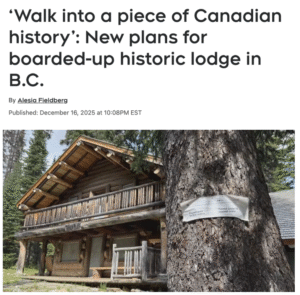
After being closed for many years, this historic building has finally seen a new turning point.
The latest development is that the Alpine Club of Canada (ACC) will take over the Twin Falls Chalet and repurpose it in a completely new way—it will no longer operate as a traditional teahouse or lodge but will be transformed into a self-service mountain hut.
Michael Geertsema, the ACC’s Manager of Facilities, stated that this operational model is entirely different from the past. In the future, there will be no permanent staff stationed here, and no food or beverage services will be provided, making it more akin to the alpine huts familiar to mountaineers. Visitors will need to bring their own food and sleeping bags, while the hut will provide essential facilities, including a kitchen, foam mattresses, outdoor toilets, and a common rest area.
Drinking water must be collected and purified by visitors themselves, and tasks such as cooking, cleaning, and daily maintenance will be shared among those staying at the hut. This approach not only reduces environmental impact but also becomes an integral part of the wilderness experience.
Additionally, the ACC plans to install solar power systems for the hut, introduce wastewater treatment facilities, and set up a display area to share the history of the Twin Falls Chalet.
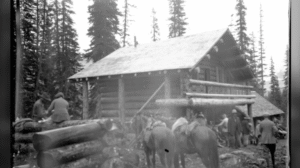
It is hoped that visitors, while enjoying the closeness to nature, can also learn about the stories of the early development of Canada’s national parks.
Why was the original operator “asked to leave the mountain”?
Drummond had been operating the Twin Falls Chalet since 1962, hosting visitors for 57 years without electricity or running water. For many, she was almost synonymous with the lodge itself.
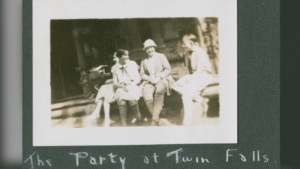
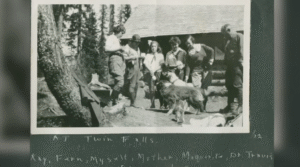
Drummond stated that park authorities requested an increase in the profit-sharing ratio, but she had never paid herself a salary—almost all income was used to maintain operations, making it impossible to bear higher costs.
Park authorities, however, indicated that the issues were not solely financial.
Public documents show that since 2015, authorities had repeatedly pointed out delays in Drummond’s fulfillment of the operational permit terms.
François Masse, Superintendent of Yoho National Park, also noted that her operating permit had expired in 2014. Despite being granted a sufficient transition period, she ultimately failed to meet the conditions required to continue operations, leading to the decision to seek a new operator.
Adjusting the Teahouse Model
After Drummond’s departure, park authorities made multiple attempts to find a new teahouse operator.
In 2021, the ACC had won the bid but later chose to withdraw after evaluation.
Geertsema believes the remote location of the Twin Falls Chalet makes it difficult to replicate the model of other popular teahouses. Compared to the Lake Agnes Teahouse, the hiking distance is nearly three times longer, posing a higher barrier for general tourists.
Assessments indicated that only about 50 hikers pass by the area daily—insufficient foot traffic to support the staffing, transportation, and operational costs required for a teahouse. Under these conditions, sustaining a teahouse model in the long term proved unfeasible.
In 2023, park authorities issued another public tender, but no bids were submitted. This also indicates that the Twin Falls Chalet is no longer suitable for continued operation as a traditional teahouse.
Creating a Unique Hiking Experience
After confirming that the teahouse model was unsustainable, park authorities adjusted their strategy and relaxed operational restrictions.
Following a re-tender in the fall of 2025, the ACC once again won the bid and decided to repurpose the Twin Falls Chalet into a self-service mountain hut.
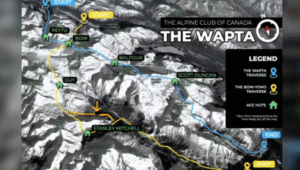
Currently, the ACC already operates two mountain huts in Yoho National Park: Parker Hut at Lake O’Hara and Stanley Mitchell Hut near Twin Falls. If the Twin Falls Hut opens smoothly, the three will form a complete summer hiking route.
Hikers can start from Takakkaw Falls, reach Twin Falls Hut and Stanley Mitchell Hut in sequence, and finally arrive at Little Yoho Valley Hut via the Iceline Trail, completing a multi-day mountain traverse.
During winter, this layout will also provide safer transit points for the Bow-Yoho cross-country skiing route, helping skiers avoid the avalanche-prone Isolated Col section.
Indeed, transforming a century-old historic building into a mountain hut is not inexpensive.
The ACC estimates that the overall restoration and renovation costs will amount to hundreds of thousands of dollars, to be shared between the club and the federal government.
Previously, park authorities had already invested funds in maintenance:
In 2021, approximately $120,000 was spent on roof replacement.
In the summer of 2025, an annex building that posed safety risks and held no historical value was demolished.
Masse stated that the goal of reopening the Twin Falls Chalet is not commercialization but rather to allow the public to reconnect with these national heritage sites in a sustainable manner while preserving their historical significance.
Opening Time and Pricing
If everything proceeds smoothly, the Twin Falls Chalet is expected to reopen to the public on August 1, 2027.
The overnight fee is projected to be around $70 per night, in line with the pricing of other alpine huts in Canada, and will primarily be used for maintenance and long-term preservation.
Geertsema expressed their excitement about the hut’s reopening: “We hope not only this generation but also future generations can come here and personally experience this part of Canadian history.”